
Dear Valued Patients, As the autumn approaches it is an ideal time to focus on health and well-being. In this newsletter I have written about the importance of incorporating balance and stability into your daily exercise regime. I have also added three tips on how you can bolster your health during the cooler months. How to improve your balance Balance is defined as an even distribution of weight enabling someone or something to remain upright and steady. Whether we’re getting dressed, walking our dog, or training for a marathon, balance is crucial in daily life. Improving our balance is just as important for our health as other types of exercise. Recent research suggests that our ability to balance may even influence our longevity as we age. Balance and Aging As we get older, our ability to balance naturally declines. When we become sedentary, this decline can accelerate, increasing the risk of falls and related injuries. In older adults, falls are a leading cause of serious injuries and loss of independence. Research also links poor balance to other health concerns, such as cognitive decline and reduced life expectancy. However, the good news is that balance can be improved at any age with regular training. Health guidelines recommend that adults aged 65 and older should engage in balance exercises at least twice a week, alongside strength, flexibility, and aerobic activities. Balance at Every Stage of Life Balance isn’t just a concern for older adults, it’s beneficial for people of all ages. Athletes use balance training to enhance performance, to prevent from injury and to recover post injury. Pregnant women notice balance shifts when their centre of gravity is shifting as their bellies grow. Women going through menopause can benefit from balance exercises to counteract bone density loss. These are just a few examples of times in life when balance exercise can be useful. Sports and Activities That Improve Balance Incorporating activities such as running, cycling, ball sports, yoga, tai chi, and resistance training such as weightlifting into your routine can improve muscle strength, coordination, and bone health while enhancing your balance. Simple Balance Exercises to Try For those looking to improve balance through targeted exercises, here are some easy options: 1. Tree pose Lift one foot off the ground, turn the knee outwards and place the foot up against opposite thigh (or leg). Hold for 15-30 seconds. If it is hard to balance lean against a wall or hold onto the back of a chair. 2. Sit-to-Stand Stand up from a seated position without using your hands, repeating 5-10 times. 3. Heel and Toe Raises Lift your heels off the floor to stand on your toes, then switch to standing on your heels, repeating 5-10 times. 4. Side Leg raise Lift one leg out sideways and hold for 15-30 seconds, repeating on the opposite side. If it is hard to balance lean against a wall or hold onto the back of a chair. 5. Heel-to-Toe Walk Walk in a straight line, placing one foot directly in front of the other. 3 Tips to help you stay healthy during Autumn: 1. Strengthen Your Immune System Autumn often marks the onset of cold and flu season. Enhance your immune defences by consuming a balanced diet rich in fruits and vegetables, staying hydrated, and make sure you get enough rest. 2. Stay Active As temperatures drop, it’s tempting to become less active. However, regular exercise is vital for maintaining physical and mental health. Engage in activities you enjoy, such as walking, cycling, or indoor fitness classes, to keep your body moving and spirits high. 3. Treatment Schedule an osteopathic appointment in order to manage musculoskeletal discomfort and prevent injury. Treatment can reduce stress levels, support circulation, improve sleep and mental health. If it’s been a while since your last visit, now’s the perfect time to book your next appointment. Let’s work together to keep you moving and thriving! Book your session today by calling 0409 052 292 or visiting https://www.stinayogaosteo.com/book-online.html.
0 Comments
Dear Valued Patients, I hope you are enjoying the sunshine and the warmth as we are quickly entering into summer! As an osteopath, I am dedicated to supporting your overall health and well-being. This season, I want to focus on something vital to your bone health and immune function: Vitamin D. Vitamin D is essential for strong bones, muscles, and a resilient immune system. The best natural source is sunlight. However, balancing sun exposure is crucial, as one-third of Australians are low in Vitamin D, yet two in three will be diagnosed with skin cancer by the age of 70. In 2023, there were an estimated 18,200 melanoma cases in Australia alone. The function of Vitamin D: Vitamin D is a fat-soluble vitamin that helps with many bodily functions, including:
Vitamin D through diet: The body can prevent or address Vitamin D deficiency by absorbing it through foods that naturally contain Vitamin D, for example: Fatty fish (like salmon and mackerel), egg yolks and mushrooms. Adjusting your diet to include these foods can make a significant difference in maintaining healthy levels. While sunlight is an essential source of Vitamin D, it’ important not to overexpose yourself to harmful UV radiation. Prolonged sun exposure does not significantly boost Vitamin D levels but greatly increases the risk of skin cancer. When UV levels are 3 or higher, most Australians can meet their Vitamin D needs with just a few minutes of sun exposure during everyday activities, such as walking or gardening. Monitor Your Skin Health The good news is that most skin cancers can be prevented by protecting yourself from UV damage. Remember to: Slip on covering clothing. Slop on SPF 50+ broad-spectrum, water-resistant sunscreen. Slap on a wide-brimmed hat. Seek shade when outdoors. Slide on sunglasses that meet Australian standards. As we navigate the busy days of summer, it’s important to prioritise your well-being. Regular osteopathic treatments are an excellent way to stay in tune with your body, prevent issues before they arise, and maintain your overall health and mobility. Whether you’re managing an ongoing concern, recovering from an injury, or simply wanting to feel your best, scheduling a tune-up can make all the difference.
If it’s been a while since your last visit, now’s the perfect time to book your next appointment. Let’s work together to keep you moving and thriving! Book your session today by calling 0409 052 292 or visiting https://www.stinayogaosteo.com/book-online.html. Take care and enjoy the season ahead. Stina Wangqvist Sources: Dietitiansaustralia.org.au/health-advice/vitamin-d healthline.com/health/food-nutrition/benefits-vitamin-d https://www.cancer.org.au/cancer-information/causes-and-prevention/sun-safety Do you experience discomfort from sitting? Poor posture is likely to be a contributing factor. Many of us are spending long hours sitting by a desk daily but prolonged static posture is not great for your back. Have you considered the importance of a great desk station setup and good alignment? If you sit at work, try to make a habit of standing, stretching and walking at least a minute or two every half hour. Moving about and stretching on a regular basis throughout the day will help keep your joints, ligaments, muscles, and tendons loose, which in turn will help you feel more comfortable, more relaxed, and more productive. An adjustable standing desks, where you can vary between sitting and standing throughout the day is ideal. Here are some important guidelines to help make sure your work area is as comfortable as possible and causes the least amount of stress to your spine to avoid neck and lower back pain from sitting: Arms Begin by sitting comfortably as close as possible to your desk so that your upper arms are parallel to your spine. Rest your hands on your work surface. If your elbows are not at a 90-degree angle, move your chair either up or down. Thighs Check that you can easily slide your fingers under your thigh at the leading edge of the chair. If it is too tight, you need to prop your feet up with an adjustable footrest. If there is more than a finger width between your thigh and the chair, you need to raise the desk/work surface so that you can raise your chair. Your feet should be flat on the floor or on a footrest. Legs With your buttocks against the chair back, try to pass your clenched fist between the back of your calf and the front of your chair. If you can't do that easily, the chair is too deep. You will need to adjust the backrest forward, insert a lumbar support or get a new chair. Lower Back Your buttocks should be pressed against the back of your chair, and there should be a cushion that causes your lower back to arch slightly so that you don't slump forward as you tire. This support is essential to minimize the load (strain) on your back. Never slump or slouch in your chair, as this places extra stress on your spine and lumbar discs. Eyes Your gaze should be aimed at the centre of your computer screen. If your computer screen is higher or lower than your gaze, you need to either raise or lower it. If you wear bifocal glasses, you should adjust the computer screen so that you do not have to tilt your neck back to read the screen, or else wear full lens glasses adjusted for near vision. Armrest Adjust the armrest of your chair so that it just slightly lifts your arms at the shoulders. Use of an armrest allows you to take some of the strain off your neck and shoulders, and it should make you less likely to slouch forward in your chair. Laptop Using a laptop can cause discomfort due to its low screen height and compact keyboard and touchpad. To improve your comfort when working at a desk, consider using an external keyboard and mouse, along with a laptop stand, to create a setup that more closely resembles a desktop computer. Most people use traditional chairs, but a Swedish kneeling chair or a Swiss exercise ball can also be useful. Traditional chairs are designed to provide complete support, but a kneeling chair promotes good posture without a back support, and an exercise ball helps develop your abdominal and back muscles while you sit. It is advisable to first talk with your doctor prior to using one of these types of chairs if you have an injured back or other health problems. What is cupping? Cupping is a traditional therapy dating back to as old as 1500 BC. It has been present in ancient Egyptian, Chinese, Greek, Indian and Korean civilisations. Cupping involves placing specially designed cups onto the skin to create a vacuum seal. This gentle suction stimulates blood circulation, reduces pain, promotes lymphatic drainage, and helps release toxins and metabolic waste from the body’s tissues. Suction from cupping draws fluid into the treated area. This suction force expands and breaks open tiny blood vessels (capillaries) under your skin. Your body replenishes the cupped areas with healthier blood flow which supports the body’s natural healing processes. Benefits of Cupping Therapy This therapy targets myofascial pain, which often manifests as muscle knots or trigger points. Cupping therapy gently stretches and loosens the fascia (the connective tissue surrounding muscles), allowing the muscles to relax and the trigger points to release. This process helps alleviate myofascial pain and restore normal muscle function. What to Expect During a Cupping Session During your session, the therapist will create a vacuum on your skin using cups and a manual pump. The cups look like large, round bulbs with wide mouths. When placed on your skin, the vacuum draws your skin in, starting the therapy. Sessions usually last about five to ten minutes. What to do After a Cupping Session Increase your water intake to help flush out toxins released during the session. You might feel a bit feverish as your body processes the toxins. This is normal. Fatigue is common after cupping. Rest is essential for recovery. Round red marks may appear on the skin. Cover these areas to protect them from sun. What to avoid After Cupping Therapy For at least 4-6 hours post-treatment, avoid: Caffeine, as it can negate the tension release benefits. Alcohol, as It interferes with the detoxifying effects. Sugar, as it can halt the detox process as your body processes glucose. Meat and Dairy, hormones in these foods can disrupt your body’s balance. Avoid hot or cold environments that can cause stiffness. Intense Exercise: Opt for light activities like walking or stretching. Common Side Effects Most people don’t experience side effects, but some common ones include: Fatigue, headache, body ache and lightheadedness. Symptoms typically resolve within a few hours. In summary Cupping is a great way to detox your body and feel better. While the process isn’t painful, you might experience some side effects afterward. Be gentle with your body and rest as needed to maximise the therapy’s effectiveness. If you have more questions, ask Stina during your next session. Stina Wangqvist is an osteopath based in the Northern Rivers, NSW (Lennox Head). If you are interested in finding out more information or would like to book an appointment, please contact the clinic by phone (0409 052 292) or book an appointment on this site. Sources 1. National Center for Biotechnology Information 2. Harvard Health What is Dry Needling? Dry needling is a popular technique used by osteopaths and other healthcare professionals to relieve muscle pain and improve function. Unlike acupuncture, which is based on traditional Chinese medicine, dry needling is rooted in Western medicine principles and focuses on treating musculoskeletal issues. Dry needling involves inserting thin, sterile needles into trigger points (tight bands of muscle or knots under the skin). The needles cause a local twitch response within a trigger point, releasing the body’s pain-relieving chemicals. By inserting a needle into a muscle, the brain’s “pain gate” is closed and potentially resulting in increased blood flow, tension and pain relief in that specific area. Dry needling is considered safe, effective, and consistent with the general scope of practice for physical therapists. Dry needling typically takes 5-15 minutes and is often part of a comprehensive treatment plan that includes manual therapy, heat, exercise, and education. Benefits of Dry Needling It helps alleviate chronic pain, including back pain, neck pain, and headaches. It releases tight muscles, enhancing flexibility and range of motion. Promotes quicker healing of muscle injuries by boosting blood circulation and can help decrease inflammation in affected areas, leading to quicker recovery. What to Expect During Treatment Your first session will begin with a thorough assessment of your condition. The practitioner will identify the trigger points and discuss the treatment plan with you. The needle insertion is usually quick and causes minimal discomfort. Some patients might feel a slight twitch or cramp as the muscle reacts, but this is normal and indicates that the treatment is working. Post-Treatment After the session, you might experience mild soreness in the treated areas, similar to the feeling after an intense workout. This is temporary and should subside within a day or two. Drinking plenty of water and gentle stretching can help alleviate any discomfort. Why Choose Dry Needling? Dry needling offers a targeted approach to pain relief and muscle rehabilitation. It is especially beneficial for athletes and active individuals looking to enhance performance and prevent injuries. With minimal side effects and proven effectiveness, it’s a valuable tool in managing musculoskeletal pain. If you’re considering dry needling, consult with a qualified osteopath to determine if it’s the right option for your specific needs. This treatment could be the key to unlocking a pain-free and more active lifestyle. When is Dry Needling Used? Dry needling can increase the range of motion in tight and hypertonic muscles. Other applications include: Joint problems like arthritis and bursitis. Back and hip pain, including disc degeneration and sciatica. Tendinitis. Scar tissue. Headaches. Whiplash. Repetitive motion disorders. Night cramps. Jaw and mouth problems such as toothache and temporomandibular joint dysfunction Side Effects and Precautions Common side effects include: Soreness during or after treatment. Minimal bleeding at insertion sites. Bruising. Fainting. Fatigue Is Dry Needling Right for You? Most people can undergo dry needling, but check with your doctor if you have: Pregnancy (especially during the first trimester). Bleeding disorders. Vascular diseases Lymphedema. Blood-thinning medication. Compromised immune system. Diabetes. Epilepsy Dry needling is not recommended for individuals with open wounds, ongoing infections, impaired healing ability, bleeding disorders, or a fear of needles without consent. Dry needling offers a valuable treatment option for various musculoskeletal issues. If you think it might benefit you, consult a qualified osteopath to explore how it can be integrated into your treatment plan. Stina Wangqvist is an osteopath based in the Northern Rivers, NSW (Lennox Head). If you are interested in finding out more information or would like to book an appointment, please contact the clinic by phone (0409 052 292) or book an appointment on this site. How do you sleep at night? Do you struggle to fall asleep at night or wake up and toss and turn for no reason? You’re not alone. About 40% struggle to get the recommended 7-9 hours of sleep per night and only about 20% of Australians report sleeping uninterrupted. Quality sleep is essential for overall well-being. Lack of sufficient rest can negatively impact both mental and physical health.This blog explores the anatomy and physiology of sleep and offers practical tips for a good night’s sleep. How Much Sleep Do You Need? Your sleep-wake cycle is influenced by multiple factors; like light exposure, age, diet, activity levels, medical conditions, medications, stress, and sleep environment. Newborns sleep the most, around 18 hours per day, while young children need about 12 hours. Teenagers typically require 9 hours, and adults generally need 7-8 hours. Women in their first trimester may need more sleep, while the elderly often experience shorter, more interrupted sleep. Sleep Stages: Sleep consists of four stages: Awake, Light, Deep, and REM sleep. Awake: Time spent in bed before and after sleep. Light: Muscles relax, heart and breath rate slow, temperature drops, and sleep begins or transitions between cycles. It It is easy to wake up. Deep: Blood pressure drops, muscle repair and growth occur, the brain flushes waste, and long slow brain waves are present. It is harder to wake up, and you may feel disoriented if awoken. REM (Rapid Eye Movement): Increased heart rate and respiration, vivid dreams, and muscle immobility to prevent acting out dreams. This stage benefits memory, learning, and problem-solving. Each stage plays a crucial role in maintaining health. During an ideal night’s sleep, your body cycles through these stages sequentially, with early cycles featuring more deep sleep and later cycles more REM. Most of the night is spent in light sleep. What Happens Physically During Sleep? While you sleep, your body rests and restores, but some parts of the brain remain active: Hypothalamus: Controls sleep and arousal, receiving light exposure information from the eyes to regulate behavioural rhythms. Brain Stem: Communicates with the hypothalamus to transition between wake and sleep, relaxing muscles to prevent acting out dreams, and producing neurotransmitters to keep the brain active when awake. Thalamus: Relays sensory information to the cerebral cortex, active during light sleep, sending images, sounds, and sensations that fill our dreams. Pineal Gland: Increases melatonin production to induce sleep when lights go down. Amygdala: Processing emotions, most active during REM sleep. Tips for a Good Night’s Sleep Set a regular bedtime routine: Try to go to bed and wake up at the same time each day. Choose the right mattress and pillows: Experiment to find your preferred firmness and support. Exercise daily: Aim for at least 30 minutes a day, with enough time between exercise and sleep. Avoid stimulants: Steer clear of caffeine, cigarettes, and alcohol before bed. Avoid devices before bed. Reduce blue light exposure by reading a book or stretching instead. Wind down before bed: Take a warm bath or read a book. Limit liquid intake: Avoid large volumes of liquid to prevent midnight trips to the bathroom. Create a sleep-friendly environment: Keep the lights out and maintain a comfortable room temperature. Osteopathy and Sleep As osteopaths, we believe in the relationship between structure and function. Osteopathic techniques cater to all bodily systems, including the musculoskeletal, neurological, cardiovascular, visceral, and cranial. For chronic insomnia, regular osteopathic manipulative medicine can help restore balance and improve sleep quality. Remember, sleep is vital for recovery. Experiment with these tips to find what works best for you. Focus on progress rather than perfection, as sleep needs and preferences are unique to each individual. Stina Wangqvist is an osteopath based in the Northern Rivers, NSW (Lennox Head). If you are interested in finding out more information or would like to book an appointment, please contact the clinic by phone (0409 052 292) or book an appointment on this site. References: For more detailed information including articles and reports please check Sleep Health Foundation and the Royal Australian College of General Practitioners. https://www.sleephealthfoundation.org.au/ https://www.racgp.org.au/ Images / Istockphoto Winter brings cold temperatures that can exacerbate aches and joint pain, making it useful to maintain regular osteopathic treatments. Regular sessions with an osteopath can significantly alleviate discomfort and improve overall well-being during the colder months. Cold weather often leads to muscle stiffness and joint pain as low temperatures cause muscles to contract and reduce circulation. This can result in decreased mobility and increased pain, particularly for individuals with arthritis or chronic joint conditions. Using techniques like stretching, massage, and joint manipulation can help to enhance blood flow, reduce inflammation, and improve flexibility. Osteopaths provide personalised exercise and stretching programs tailored to an individual’s specific needs. These exercises are designed to strengthen muscles, support joints, and enhance flexibility, which is crucial in preventing injuries and managing pain during winter. Osteopaths offer advice on lifestyle changes and ergonomic adjustments to reduce strain on the body, further contributing to pain management and overall health. Moreover, regular osteopathic treatments can boost the immune system by promoting better circulation and lymphatic drainage, helping the body to fend off common winter illnesses. This holistic approach ensures that individuals not only manage their pain but also maintain their general health and well-being throughout the winter. Regular osteopathic treatment is vital for combating winter-induced aches and joint pain. By improving circulation, reducing inflammation, and enhancing flexibility, osteopathy provides comprehensive care that helps individuals stay active and healthy during the colder months. Stina Wangqvist is an osteopath based in the Northern Rivers, NSW (Lennox Head). If you are interested in finding out more information or would like to book an appointment, please contact the clinic by phone (0409 05 22 92), or book an appointment here: https://www.stinayogaosteo.com/book-online.html References:
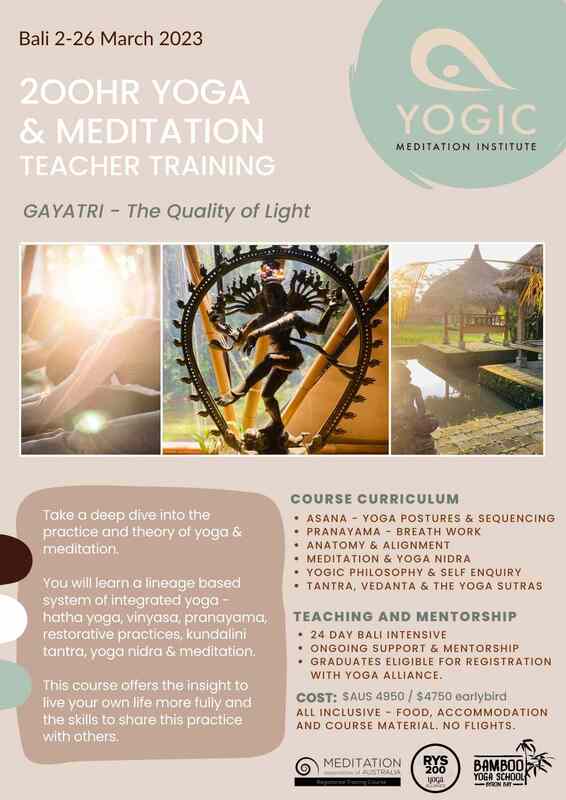
I am excited to share a project that my partner Mark an I have been working on for a few years now: A 200 hr Yogic Meditation Teacher Training in Bali in March 2023. This training will be a hands-on, face-to-face course, lead by experienced teachers who have been successful in teaching yoga over a long time.
On this course I will share the skills to teach safe yoga classes. We will touch on alignment, adjustment, props and sequencing. We will dive deep into anatomy and physiology and learn about all the the bodily systems. I want this course to be a life changing experience for anyone choosing to do it, and I promise to offer my guidance and support all the way. |


RSS Feed